FREE sourcing support. Qualified business buyers may receive up to 3% sourcing support. Eligibility applies to qualified business buyers and is confirmed after we review your product, quantity, destination, and sourcing requirements.

Material applications

SelvedgePilot Procurement: turn yarn and fiber end use into a US purchase brief

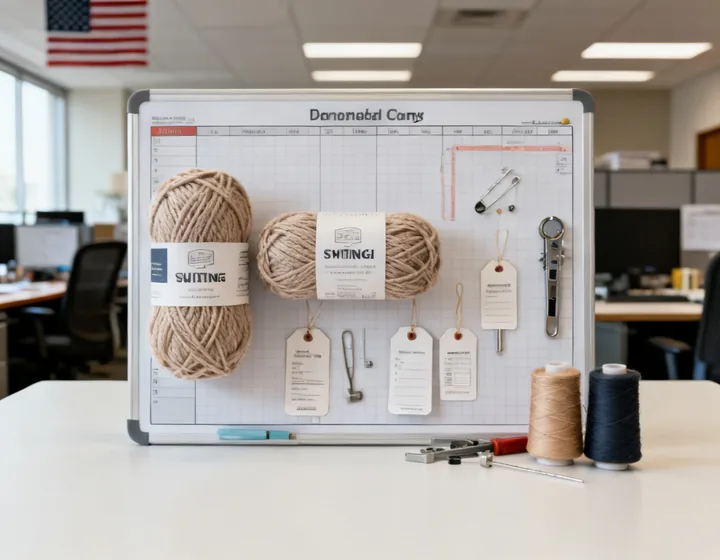
Apparel knitting, sewing thread and industrial yarn uses on one planning board

Application requirements

Describe end use and exposure conditions

A staple fiber that will be spun for next-to-skin jersey is not the same purchase as a filament destined for industrial sewing or a coarse yarn for bags. Write the garment or component, expected wash temperature, abrasion, sunlight or chemical exposure, and whether the yarn will be dyed, waxed or left greige. Contact against skin, outdoor weathering and industrial oil each change which linear density, twist and finish are even relevant. If the development team only knows a color name, keep count and ply open instead of copying a previous style. This page does not introduce a new measured search landing; it converts an already reviewed procurement task into fields a mill can quote. Destination inside the United States should sit beside the use case because humidity and transit time affect moisture regain on cellulose yarns.

Identify the test method and sample condition

Ask whether breaking force, evenness, hairiness, pilling or moisture tests will be run on the yarn, the knitted panel or the sewn seam. Name the method family you intend to use, then leave edition, specimen count and conditioning as items the mill or laboratory must confirm. A public ASTM listing is a vocabulary, not a passing score. Sample condition matters: a cone after winding can show different hairiness than a laboratory lea. If the buyer later needs fiber-content evidence for a covered US textile, that request is separate from a mill’s process certificate. Keep those documents in different rows so a social-responsibility audit is not mistaken for a count result.

Match quantity, finish and usable yield to the application

Knitting programs often care about dye-lot continuity across cones, while sewing-thread programs care about lubrication and knot policy. State quantity in kilograms, pounds or cones, and say whether mixed lots are allowed. Finish, oil type and winding tension change needle heat and waste; they belong on the RFQ even when the fiber chemistry looks familiar. Usable yield after winding, splicing or moisture conditioning can move total cost more than the headline unit price. Stock yarn can shorten sampling when count, twist and package already exist; custom development can lock linear density and finish but needs explicit minimums, lab-dip gates and, after knitting or weaving, GSM or usable-width targets. A family brochure is not exact-product evidence: bind colorfastness, pilling, tensile strength or moisture vapor transmission to method, edition year, specimen and the quoted article. Share the application, documents you will require and any site constraints such as receiving hours or mixed-container rules. We will use that list to request comparable mill answers, without claiming that one fiber family is interchangeable with another.

Send the application with the yarn brief

Include end use, exposure, quantity unit and destination so mill options can be filtered before sampling starts.

Enter your name.
Enter a work email.
Describe the material, quantity and destination.

By sending this form you agree to the Privacy Policy.